


Let’s be honest — nobody starts a business because they love managing payroll. You had a vision, a product, maybe a killer idea. And then one day, boom — you’re staring at a spreadsheet trying to figure out EPF contributions, TDS slabs, and why your employee’s salary doesn’t match what he was told he’d get.
Sound familiar? You’re not alone. Payroll management in HR is one of the most dreaded yet most critical functions in any organization — big or small. Get it right, and your employees trust you. Get it wrong, and you’re looking at compliance penalties, unhappy staff, and a really bad Monday.
So, whether you’re a startup founder in Bangalore, an SME owner in Pune, or an HR manager trying to streamline operations — this guide is for you. We’re going to break down everything: from what payroll management actually means, to the best payroll software for small businesses in India, to how to calculate TDS for employees without pulling your hair out.
Ready? Let’s go!
What Exactly Is Payroll Management?
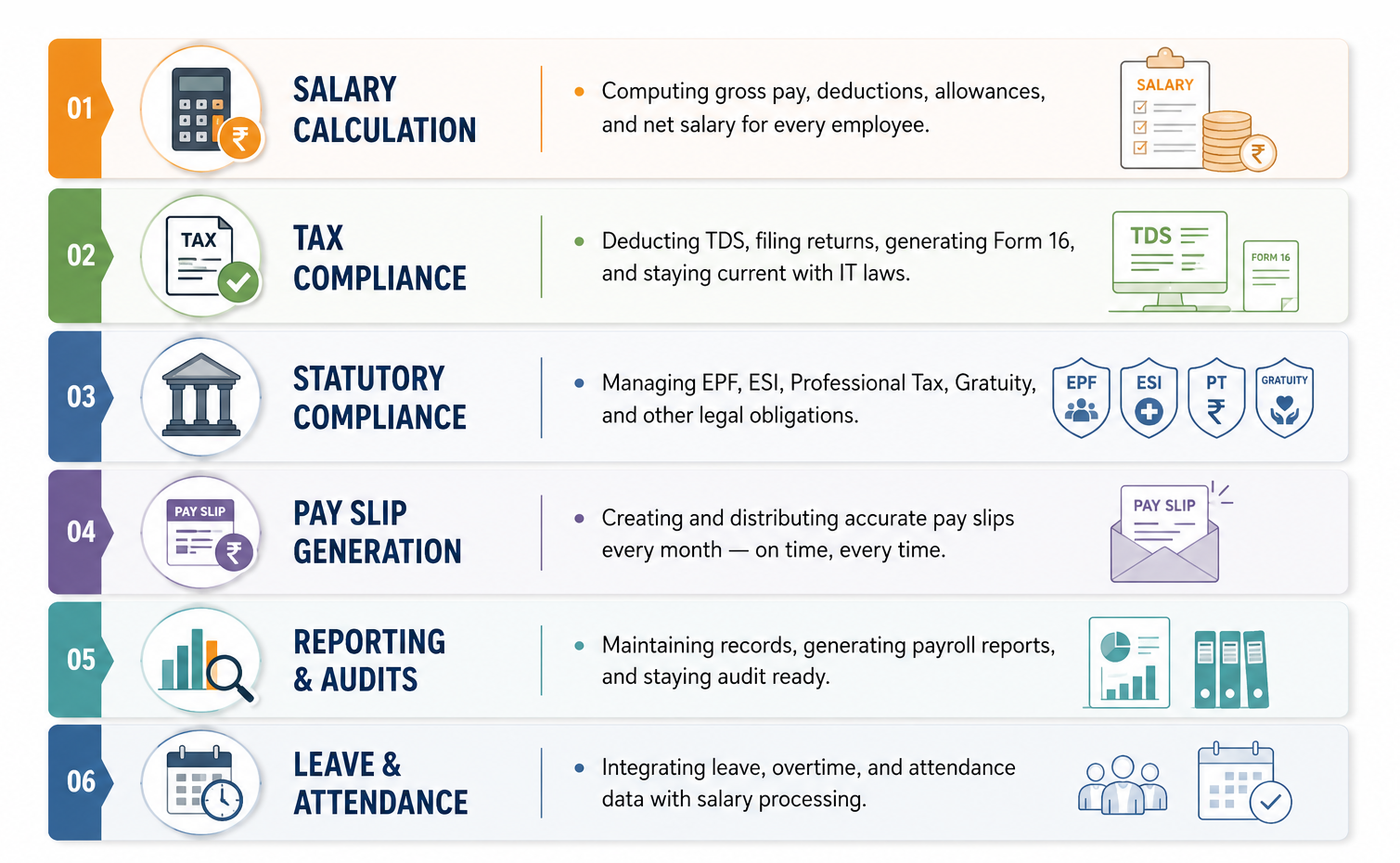
Why Payroll Management in HR Is More Than Just Paying Salaries
Let’s be honest — nobody starts a business because they love managing payroll. You had a vision, a product, maybe a killer idea. And then one day, boom — you’re staring at a spreadsheet trying to figure out EPF contributions, TDS slabs, and why your employee’s salary doesn’t match what he was told he’d get.
Sound familiar? You’re not alone. Payroll management in HR is one of the most dreaded yet most critical functions in any organization — big or small. Get it right, and your employees trust you. Get it wrong, and you’re looking at compliance penalties, unhappy staff, and a really bad Monday.
So, whether you’re a startup founder in Bangalore, an SME owner in Pune, or an HR manager trying to streamline operations — this guide is for you. We’re going to break down everything: from what payroll management actually means, to the best payroll software for small businesses in India, to how to calculate TDS for employees without pulling your hair out.
Ready? Let’s go!
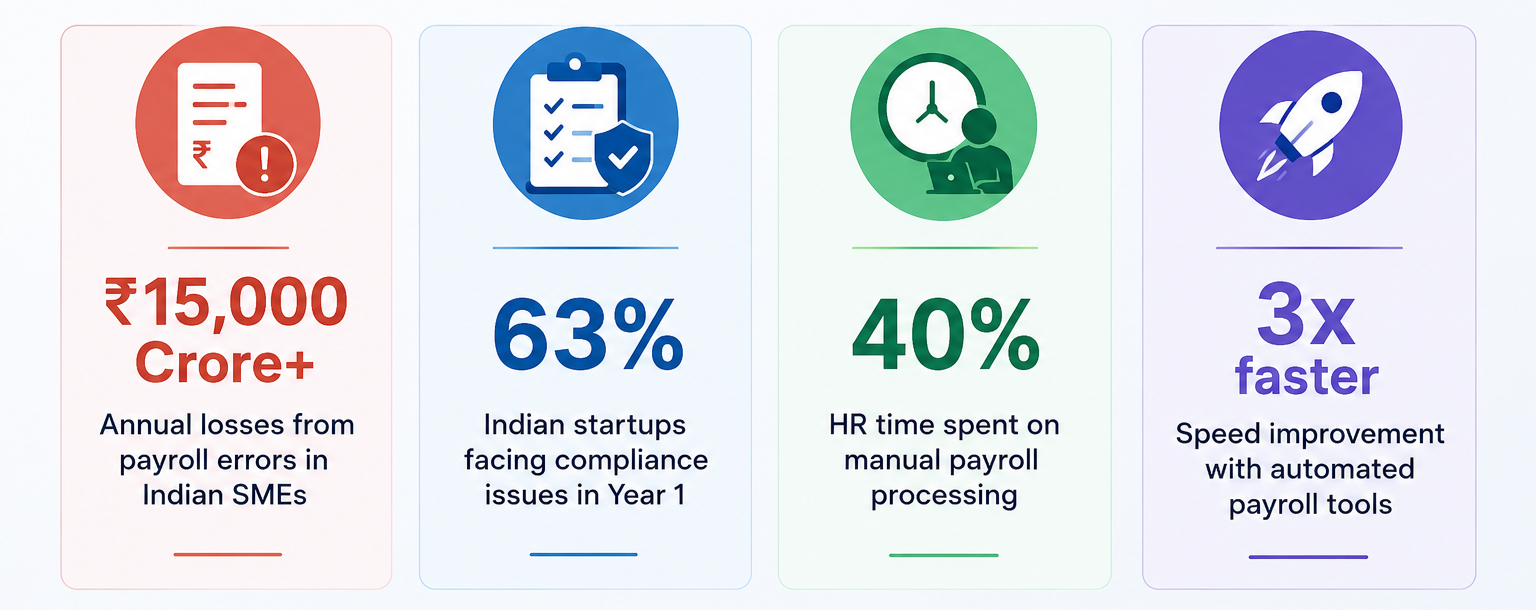
💡 Did you know? Over 60% of small businesses in India still manage payroll manually or on Excel. That’s like navigating Mumbai traffic with a paper map. It works… until it really doesn’t.
Payroll in India: The Numbers That Will Shock You
Payroll Management in Excel: Why India Still Loves (and Hates) It
Ah, the beloved spreadsheet. If there’s one thing that unites Indian HR managers, it’s the complicated relationship with Excel.
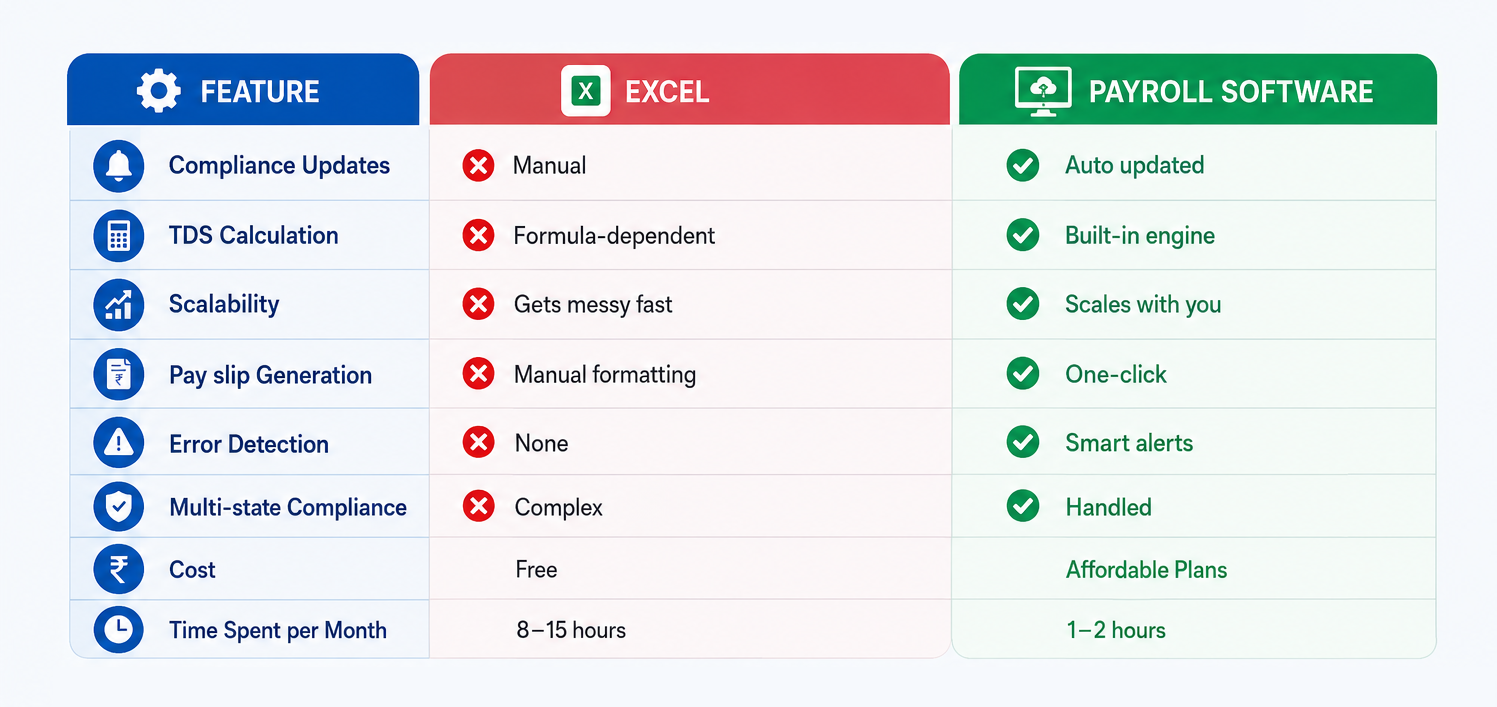
Payroll management in Excel is extremely common — and honestly, it made sense a decade ago. You build your formulas, track your columns, and it gets the job done. But as your team grows beyond 10, 20, or 50 people? Excel starts showing its cracks.
Here’s the thing about Excel payroll: it has no real-time compliance updates. The tax slabs changed in Budget 2025? You’ll need to manually update every single formula. Someone made a formula error three months ago? Good luck tracing it. New joinee’s CTC split is different? Prepare for a weekend of data entry.
⚠️ Excel Payroll Risk Alert: Manual data entry errors are the #1 cause of payroll discrepancies in Indian SMEs. Even a misplaced decimal can mean paying out the wrong amount — and explaining it to a disgruntled employee is never fun.
Payroll Management in Excel vs. Payroll Software: Head-to-Head
Steps to Automate Employee Salary Calculations and Tax Deductions
Okay, so you’re convinced it’s time to automate. But where do you even start? Automating payroll isn’t just about buying a software tool — it’s about setting up a clean, reliable process that runs like clockwork every month.
Here’s a step-by-step walkthrough of how to actually automate employee salary calculations and tax deductions in India:
8 Steps to Automate Payroll in Your Indian Business
Streamlining payroll isn’t just about saving time — it helps reduce compliance errors, improves employee trust, and keeps your business financially organized.
1. Set Up Your Employee Master Data
Collect and digitize all employee details: PAN, Aadhaar, bank account, CTC structure, joining date, and department.
2. Define Salary Structures
Set up components: Basic, HRA, Special Allowance, LTA, Medical, Bonus, etc. Each component affects tax differently.
3. Configure Statutory Deductions
Set EPF (12% of basic), ESI (if applicable), Professional Tax (varies by state), and TDS based on income slabs.
4. Integrate Attendance & Leave
Connect your attendance system so LOP (Loss of Pay), overtime, and leave encashment auto-flow into payroll.
5. Set Up TDS Calculation Engine
Input employees’ declared investments (80C, 80D, HRA exemption, etc.) so TDS is computed accurately each month.
6. Run Payroll & Review
Process payroll, review the summary, check for anomalies (large variances, zero-salary employees), and approve.
7. Disburse Salaries & File Returns
Transfer salaries via NEFT/RTGS, and ensure TDS is deposited by the 7th of the following month.
8. Generate Payslips & Reports
Auto-generate payslips, Form 16 at year-end, and compliance reports for audits.
How to Calculate TDS for Employees in India
Ah, TDS. The three letters that make every HR and finance person take a deep breath. But here’s the good news: once you understand the logic, it’s actually quite systematic.
TDS (Tax Deducted at Source) on salary is governed by Section 192 of the Income Tax Act. Here’s the simple formula:
💡 TDS = (Estimated Annual Income – Deductions – Exemptions) × Applicable Tax Slab Rate ÷ 12
Let’s break that down. You start with the employee’s gross annual salary. From that, you subtract:
- HRA Exemption (if applicable, based on rent paid)
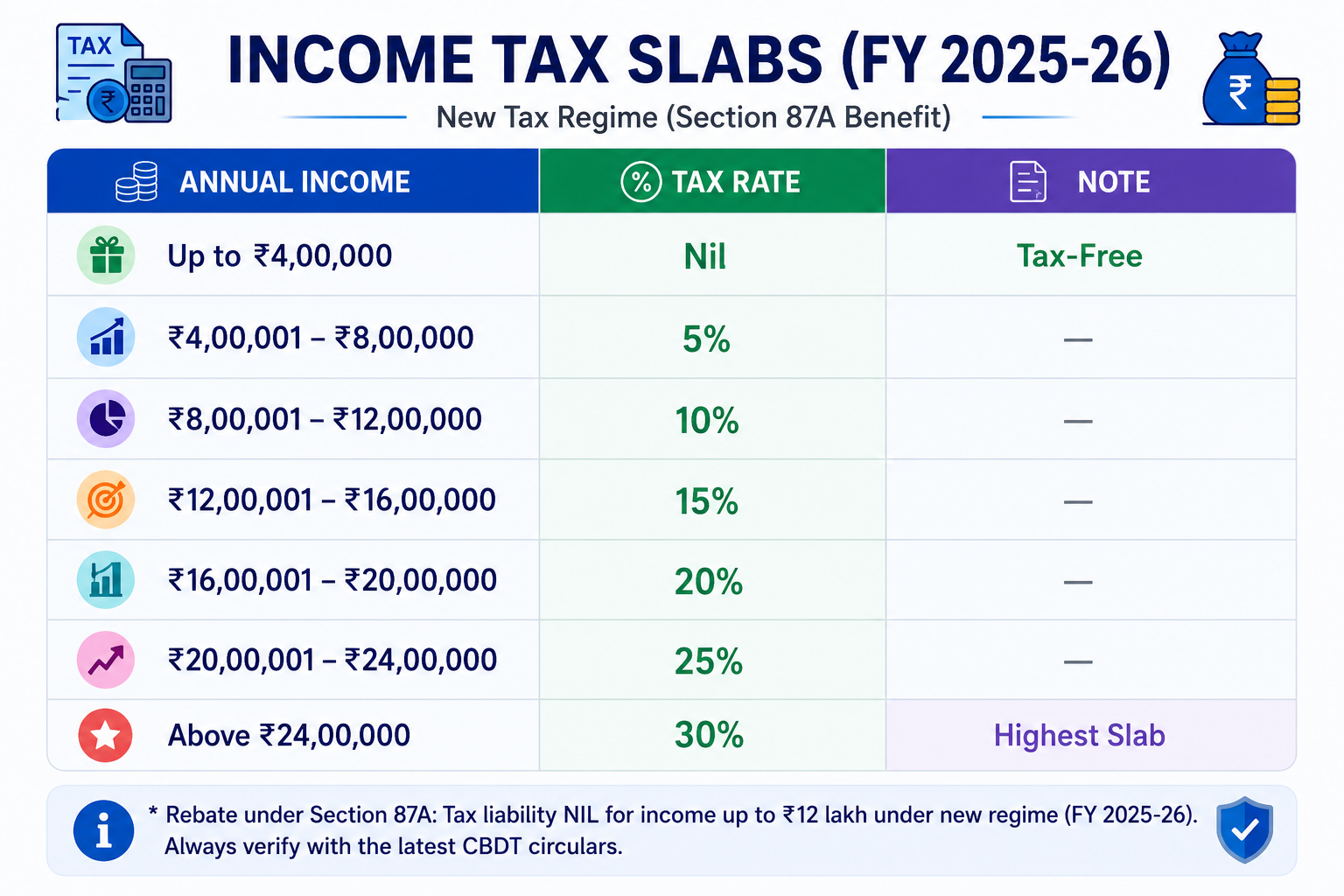
- Standard Deduction of ₹75,000 (under new regime for FY 2025-26)
- Section 80C deductions (up to ₹1.5 lakh): PPF, ELSS, LIC, EPF, etc.
- Section 80D: Medical insurance premiums.
- Other deductions: NPS, home loan interest (Section 24), etc.
The remaining taxable income is then taxed as per the applicable slab (old or new regime — employee’s choice), and that annual tax amount is divided by 12 to get the monthly TDS deduction.
TDS Tax Slabs for Employees — FY 2025–26 (New Regime)
Where to Find Payroll Management Platforms with Compliance Updates for India
This is the million-rupee question, isn’t it? You need a platform that doesn’t just process payroll, but stays on top of compliance changes — new tax slabs, PF rule changes, state PT amendments, ESI contribution rate tweaks — so you don’t have to.
Here’s what to look for in a payroll platform for India:
- Auto-updated compliance engine for EPF, ESI, TDS, and PT.
- Support for both old and new tax regimes.
- Multi-state Professional Tax handling
- Integrated Form 16, 24Q, and other filing support.
- Attendance & leave integration
- Employee self-service portal
- Dedicated India payroll support team.
- Regular compliance update notifications.
Platforms like Keka, Darwinbox, Zoho Payroll, GreytHR, and Razorpay Payroll are known for their India-specific compliance handling. That said, always evaluate based on your company size, budget, and specific needs.
Best Payroll Software for Small Businesses in India
Let’s talk specifically about the best payroll management software options for small businesses in India. Because startups and SMEs have unique needs — tight budgets, lean HR teams, and no room for complex implementation projects
Best Payroll Software for Small Businesses in India — Quick Comparison
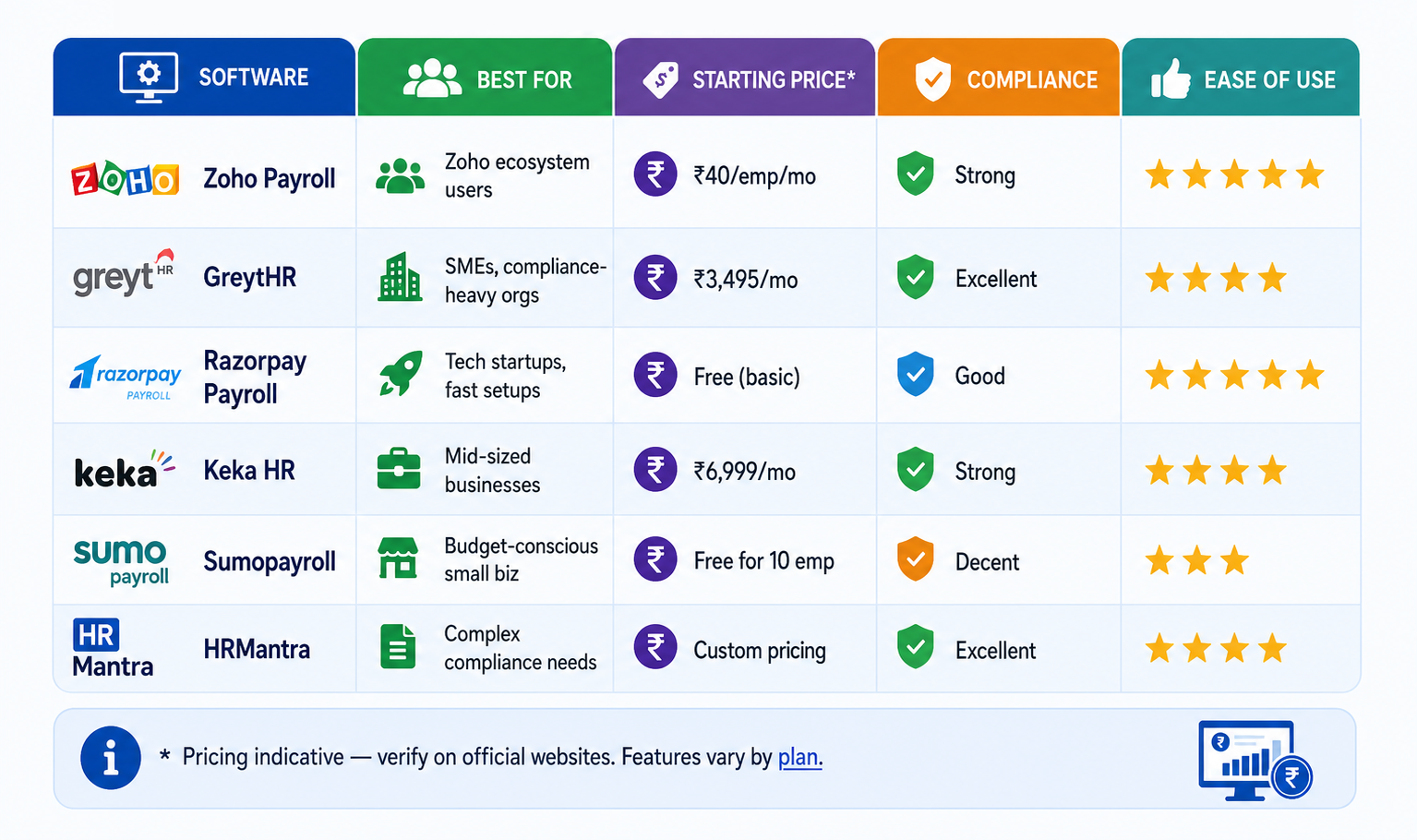
Pricing indicative — verify on official websites. Features vary by plan.
Our honest take? For most small businesses just starting out, Razorpay Payroll or Zoho Payroll offer the best bang for the buck. They’re intuitive, India-compliant, and don’t require a dedicated IT team to set up.
Top Payroll Outsourcing Companies in India for Startups
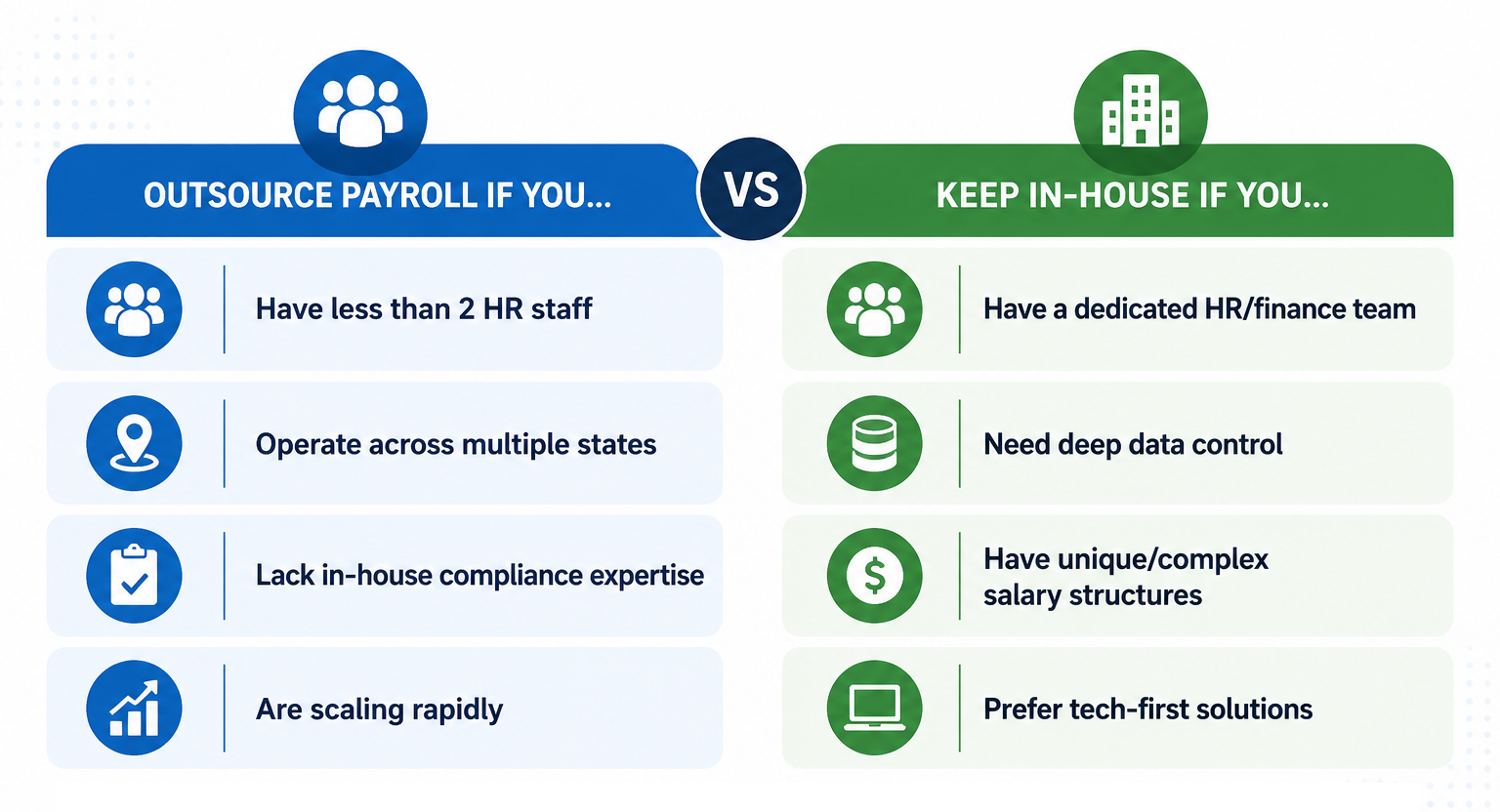
Sometimes, even the best software isn’t enough. If you’re a founder wearing 10 hats, or an HR team of one managing 50 employees, payroll outsourcing might be the smartest move you make this year.
Why outsource payroll? Because it hands the compliance headache to specialists who eat, sleep, and breathe Indian labour law. They handle TDS filing, EPF/ESI returns, payslip generation, and everything in between — while you focus on actually running your business.
Should You Outsource Payroll? A Decision Framework
The Future of Payroll: AI, Automation & What's Coming
Here’s something worth thinking about: payroll as we know it is changing fast.
AI-powered payroll tools are already beginning to predict anomalies before they become errors, suggest tax-saving structures for employees, and auto-reconcile discrepancies in real-time. Some platforms are moving toward on-demand payroll — where employees can access a portion of their earned salary before payday, improving financial wellness without impacting employer cash flow.
In India, the push for a unified labour code is also reshaping compliance requirements, making it even more important to have a system that updates itself rather than one that depends on your HR team to track regulatory changes.
🔮 The companies that invest in smart payroll infrastructure today will spend dramatically less time, money, and stress on compliance tomorrow. It’s not just an HR tool — it’s a strategic investment.
Quick Wins: 5 Things You Can Do Today to Improve Payroll
- Audit your current salary structures — are all components tax-efficient?
- Collect investment declarations from all employees before Q4 (or your fiscal year-end)
- Switch from manual Excel to even a basic free payroll tool — it pays for itself in saved time
- Set up a payroll calendar with fixed deadlines for input submission, review, and disbursement
- Make sure your TDS deposits happen before the 7th of the following month — every month, no exceptions